
4 December 2025. Are we seeing the end of languages at Russell Group universities?
Are we seeing the end of languages at Russell Group universities?
As Nottingham University proposes to eliminate is languages provision - the first Russell Group university to do so - what does this mean for the future? And what can we do about it?
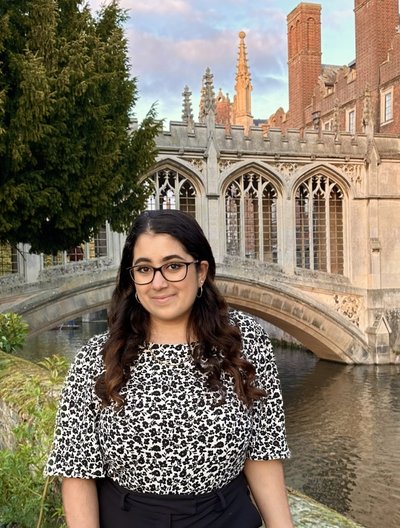
By Zara Fahim, AHRC-funded Midlands4Cities PhD in Linguistics (Modern Languages)
“Are you even valued as an (academic) linguist in the UK if you are not a native speaker nor have studied languages at Oxford or Cambridge?”
A question I found myself asking my supervisor in the first year of my PhD in German linguistics, after debriefing on a busy summer conference season during which I often felt in the minority of researchers. Aside from my intersecting characteristics as a young, female, non-native German-language researcher of colour, at one conference in England, I was also the only participant not based at Oxford, Cambridge or from the Germanophone world. As my supervisor sat in her office at the University of Nottingham disproving yet another one of my classically hyperbolic, imposter-induced thoughts (and classing my conference experience as exceptional, not accurately reflecting the UK HE languages landscape), university management was, unbeknownst to us in the same building, culling language courses, dismantling our language department and effectuating the very prophecy I had been fearing: are we seeing the end of languages at Russell Group universities across the UK?
Languages have been offered at the University of Nottingham since it was founded as a College in 1881. It remains in the top ten providers of degrees in Languages and Area Studies in the UK, ranks third in the Russell Group for research, and has one of the largest modern languages departments in the UK (with over 500 students). It is not making a loss. And yet, it is the first to go.
What is more, the devaluation of its language department by management extends to its devaluation of language students, too: The University of Nottingham has still not announced its planned closures to students in the department formally. We have received zero communication from management. Many students were notified through a BBC news post on Instagram, from their own personal scrolling.
In management’s eyes, we are mere vessels of labour, bringing in research funding and conducting internationally-recognised and impactful research, yet paraded to fit management’s global agenda, only when deemed appropriate.
When I flocked to social media to advocate against these closures this week, I was equally shocked to find many young people supporting management’s decision. What was meant to be a series of innocent TikTok videos by me raising awareness (collectively amassing over 670k views and 60k likes), revealed more about the deep-rooted ideologies towards language learning of teens today. Thousands of students left comments sharing the widely-known monolingual mindset that ‘English is enough’, or erroneously assuming prospective students can ‘just go elsewhere’, with some misunderstanding the content of language degrees altogether (arbitrarily reducing it to skills gained in just grammar and translation), and others promoting the weakening of Arts and Humanities degrees in relation to STEM – the irony being that some STEM subjects are also on the list to be cut at Nottingham (cf. microbiology, electronic engineering etc).
I do not blame these young people though. As a generation who could not vote in the EU referendum (myself included) – and thus are coming of age in this post-Brexit and post-COVID-19 era with little exposure to international opportunities (such as ERASMUS+) – it is not inconceivable to imagine why a languages degree would appear futile if you cannot tangibly see where it can take you. In the face of AI and broader societal shifts that these teens are inadvertently responding to, it is clear we have a long way to go to effectively reach and challenge today’s young people.
Like many, I have spent my short academic career thus far advocating for widening participation in MFL, particularly among ‘underrepresented’ students (i.e. from the ‘Black, Asian, and Ethnic Minority’ community) and especially those with knowledge of a home, heritage and community language (cf. Fahim 2023; 2024a; 2024b). Sitting in a region with high levels of educational deprivation, closing the languages department at Nottingham not only further dismantles the sector-led interventions by Nottingham researchers to promote the linguistic and cultural diversity in the East Midlands, but also remains insulting to the many local partner projects and organisations who will be gravely impacted (e.g. with NottinghamLingo, ChalleNGe Nottingham, and the UNESCO Nottingham City of Literature).
With the closure of languages at both the Universities of Leicester and Nottingham, there will be no providers of modern languages degree programmes in the East Midlands region. We risk becoming a regional cold spot for language provision.
How can the University claim to be a ‘university without borders’ while ignoring the discriminatory implications for students on its doorstep? No child should have to forgo studying at their first-choice institution because they cannot afford it. No multilingual child should have to forgo studying or celebrating their heritage language(s) because their university offers no mode to champion it.
The University should be contributing to a more equitable and inclusive educational system that reflects the diversity of the modern UK.
The landscape of languages in Higher Education is unequivocally changing at exponential and unprecedented rates. As the next generation of linguists gear up for their final post-16 language exams, they should not have to be worrying if their course is even going to run, or if their chosen university will be the next target. I worry many adolescents will be fearing the same as I have done: If more and more universities close language degrees across the UK, is studying languages at university level even a plausible goal anymore for the average Brit? If Nottingham sets a precedent for other Russell Group institutions to close their language departments, do we risk perpetuating university hotspots (such as Oxford and Cambridge) at the expense of regional cold spots? Will there be any universities left to study languages at in the UK? Reputational status notwithstanding, no university is safe anymore, it seems.
Right now, the Council of the University of Nottingham is discussing the plan to close all Nottingham’s undergraduate degrees in modern languages and cultures, with final decisions made during the present academic year.
To help oppose these plans, please consider signing a student-led petition Petition · Stop the removal of Modern Languages courses at the University of Nottingham! - United Kingdom · Change.org and supporting initiatives found at https://www.savemlcatnotts.org.uk/