
4 June 2026: Why school language policy matters: Lessons from the Coventry Project
Why school language policy matters: Lessons from the Coventry Project.
Collaborating with schools, treating them as active policymakers and developing a shared understanding of how language shapes learning translates to a research-informed approach to language across the curriculum: strengthening educational equity, improving curriculum access, and raising the status of languages for all learners.
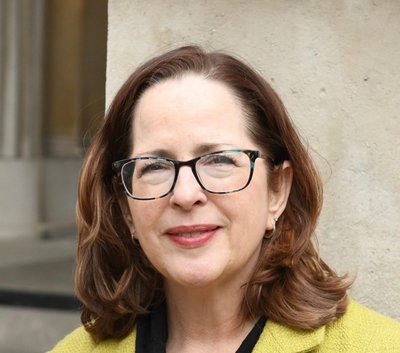
By Eowyn Crisfield, honorary Norham fellow, University of Oxford and Founder and Academic Director of Oxford Collaborative for Multilingualism in Education (OCME).
Across England, languages occupy a complicated position in the school system. On the one hand, classrooms are increasingly multilingual: large numbers of students speak languages other than English at home, and schools routinely support learners developing English as an additional language. On the other hand, student uptake for languages has declined, particularly since languages ceased to be compulsory at Key Stage 4 in 2004 (Ayres-Bennett & Forsdick, 2025). Rather than considering the need for improved approaches for students learning EAL and the need to improve interest and uptake in languages as separate agendas requiring separate solutions, school language policy can help schools reconsider a fundamental question: what is our overall approach to language in education? Rather than treating English, EAL provision, modern foreign languages, and home languages in isolation, a school language policy brings them together within a coherent framework.
The Coventry Language Policy Project provides a practical example of how this can be done. Developed collaboratively with schools and partner organisations across the city, the project is supporting leaders and teachers to design a shared, research-informed approach to language across the curriculum. In doing so, it aims to strengthen educational equity, improve curriculum access, and raise the status of languages for all learners.
School language policy
A useful starting point is the recognition that every school already has a language policy, whether it is written down or not. Decisions about which languages are taught (and when, and by whom), which are visible in the school environment, and how language is used in classrooms all reflect underlying beliefs about language, learning, and learners.
Researchers describe language policy as operating through three interconnected elements: language practices (how languages are used), language beliefs or ideologies (the values assigned to languages and varieties), and language management (the deliberate actions taken to shape practice) (Spolsky, 2009). In many English schools, these elements are dispersed across different documents such as literacy policies, EAL guidance, equality statements, or modern languages curricula. Analysis of school policies across England suggests that very few schools articulate a coherent whole-school language policy that connects these areas (Forbes & Morea, 2024). A whole-school language policy offers one way to bring these elements together.
The Coventry Language Policy Project
The Coventry Language Policy Project was designed to address exactly these issues. Working with a group of representatives from schools and other organisations across the city, the project supports leaders and teachers to examine how language currently operates within their institutions and to develop a shared strategic approach.
Rather than imposing a ready-made policy, the project uses a collaborative model. Two full-day workshops brought together working group participants to engage with research on multilingualism, reflect on their own experiences as language users and learners, and learn about language policy in educational contexts. This process helped participants surface assumptions that often remain implicit, and impact practices in schools. For example, participants explored questions such as:
- What beliefs about language currently shape practice in our schools?
- How do we support students learning English while also learning the curriculum?
- How can multilingualism be recognised as a resource for all learners?
- What role should language awareness play across subjects?
Through structured discussion and collaborative analysis of research, participants worked towards identifying a small set of shared principles that will underpin a city-wide language policy framework, and the policy is being developed from those principles.
A key feature of the Coventry project is that it treats teachers and school leaders as active policy-makers. National frameworks set broad expectations, but the everyday decisions made in classrooms ultimately determine how language is experienced by students. By involving schools directly in policy design, the project builds ownership, coherence, and practical relevance.
From policy to practice
Importantly, the goal of the Coventry project is not simply to produce a policy document that sits static in a file. The aim is to develop a shared understanding of how language shapes learning and to translate that understanding into everyday practice across schools, so that all students have the best opportunity for meaningful experiences with languages and language learning in Coventry schools. In practical terms, this might include clarifying expectations around academic language across subjects, aligning approaches to English development and curriculum access, recognising and valuing students’ linguistic repertoires, and strengthening the status of language learning across the school.
For Coventry schools, the project therefore represents more than a policy exercise. It is an opportunity to rethink how languages are positioned within the education system, not as separate concerns, but as a central element of learning, identity, and opportunity.
To read more about the role of language policies to increase equity, please visit the OCME website and read the related blog ‘Coventry: Building a Language Policy for Equity’ (Crisfield, 2026)
References
Ayres-Bennett, W., & Forsdick, C. (2025). Why top-down language policy matters. Cambridge University Press.
Forbes, K. (2022). We are multilingual: Identity education to promote engagement and achievement in schools. Cambridge University Press.
Forbes, K., & Morea, N. (2024). Mapping school-level language policies across multilingual secondary schools in England. Language and Education. Advance online publication. https://doi.org/10.1080/09500782.2024
Spolsky, B. (2009). Language management. Cambridge University Press.