
3 October 2025. UK Research and Innovation (UKRI) brokering engagement between languages researchers and policymakers through funding and impact
UK Research and Innovation (UKRI) brokering engagement between languages researchers and policymakers through funding and impact
It is a perennial challenge to present research on languages to government. UKRI is leading on bridging this gap between researchers and policymakers.
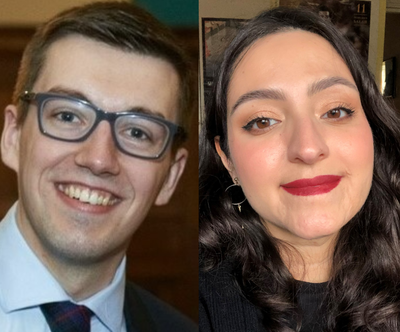
By James Fenner (AHRC) and Claudia Viggiano (ESRC), for UKRI.
How do you showcase and promote languages and linguistics research to policymakers?
How do you as a national higher education funding body – UK Research and Innovation (UKRI) – support the research community in engaging with policy? How do you get researchers to pitch their project findings in a meaningful way that speaks to policy?
At the Arts and Humanities Research Council (AHRC) and the Economic and Social Research Council (ESRC) – two of the nine organisations that form UKRI – we are responding to these questions and making the case that academic engagement has a role to play in building intelligent relationships between academia and policy professionals.
For us, researcher engagement with policy comes in three distinct areas: brokering relationships, brokering through impact and brokering through funding opportunities/training.
Brokering relationships
The cross-Government Languages Group (XGLG) is a gathering of civil servants representing as many government departments as possible, seeking to understand better language policy issues across different departmental responsibilities and better coordinate approaches to language policy.
The Academic Engagement sub-group of the XGLG supports the development and maintenance of intelligent and valued relationships between government and academia, so that government makes more effective use of languages expertise, and the languages research community contributes to the creation of evidence-based government policies. It provides a forum in which members can update each other, share ideas and best practice, and collaborate on specific activities including but not limited to coherent communications, networking and events.
To this group, we bring knowledge of our funded research projects and relevant researchers to the conversations and suggest linkages with activity in individual departments. We also provide feedback, with our understanding of our research community, on strategic thinking and other initiatives posed by members of the group. We also engage with other funders, such as the British Academy, and can work collectively with them to highlight the relevance and importance of languages research.
Brokering through impact
While brokering relationships is important, engagement through meetings is not always possible. Providing policymakers with brief, punchy stories is an alternative way to showcase the impactful work of research and its application to policy. For example, in collaboration with DHSC, a knowledge exchange workshop was convened in July 2024 to discuss language-related research and its overlap with public health and national health priorities.
To gather evidence for it, 100–200-word impact stories were drafted on research projects that explored the use of languages in public health settings/contexts. In collaboration with Professor Wendy Ayres-Bennett, we selected ten projects (funded by AHRC and ESRC but also other funders) that encapsulated languages and public health: from public health messaging for Hassidic Yiddish communities during Covid-19; through to championing the benefits of bilingualism for children with autism. We approached the original project leads and ensured the story drafts accurately represented their projects – capturing key information, initial outputs/benefits and longer-term impacts.
These impact stories were shared in advance of the event and were very well received by DHSC and all attendees. They have since been referred to, as part of ongoing cross-government working group and sub-group discussions. They have proven to be a pithy/punchy medium to pitch research impacts to policymakers, in turn giving researchers insights into what policymakers are looking out for.
Similarly, ESRC has been tracking the progress of recent investments to identify and showcase their impact stories, which are then disseminated on the UKRI website: ESRC research outcomes and impact – UKRI. New impact stories are published regularly and circulated to relevant stakeholders.
Brokering through funding opportunities and training
We also support our community through policy-orientated funding opportunities. Our flagship scheme is the UKRI Policy Fellowships. It provides the opportunity to bring academic expertise to bear on pressing policy challenges and support the career development of academics in the process. Embedding some of the UK’s brightest researchers into the heart of government, fellows help inform and shape effective public policy and its implementation.
Leading on the scheme, on behalf of UKRI, ESRC has previously funded fellowships in several government departments including BEIS (prior to the current departments DBT, DESNZ and DSIT), CBO, DCMS, Defra, DfE and DfT.
AHRC has been part of the scheme for several years with arts and humanities researchers being embedded in placements in DCMS, DLUCH, FCDO, and Welsh Government (see 2023 round). However, we are keen to contribute more to this scheme championing languages through fellowship placements with other government departments in the future: an opportunity that the newly opened 2025 round can provide.
For mid-career researchers, we also provide an opportunity within Parliament, through ESRC’s Parliamentary Thematic Research Leads Scheme. Based on the concept of Chief Scientific Advisers, Thematic Research Leads (TRLs) bring their impartial expertise, extensive policy knowledge and strong network of research connections to a variety of teams in Parliament. The purpose of the TRL role is to facilitate and enhance the use of research evidence and expertise in Parliament (in both the House of Commons and House of Lords) through effective knowledge exchange, collaboration and processes. Launched in 2024, the second cohort is underway with eight TRL researchers active until 2026.
In addition to these, we also offer training to researchers via a funded three-day training course through our Engaging with Government Programme, in partnership with the Institute for Government. Its aim is to help researchers understand the policymaking process and apply it to their research. It also enables links to be forged between policymakers and new arts and humanities research. Like the Policy Fellowships above, it is open to all AHRC’s/UKRI’s remit including languages.
We also support policy engagement at a studentship level, where there is a UKRI policy internship scheme which enables UKRI-funded doctoral students to undertake a three-month placement at one of a selected group of influential policy organisations (the scheme supporting on average 125 internships per year).
It is through funding/training schemes like these that mutual benefits can be realised: reciprocal outputs and impacts generated as well as knowledge exchange.
Enormous opportunities
Through these three brokering channels, we have been able to explore the possible ways in which languages research can contribute to and influence policy. AHRC and ESRC (as part of UKRI) are committed to supporting languages and linguistics research and how it can align to societal challenges and government priorities. The potential opportunities for continued collaboration are enormous.